
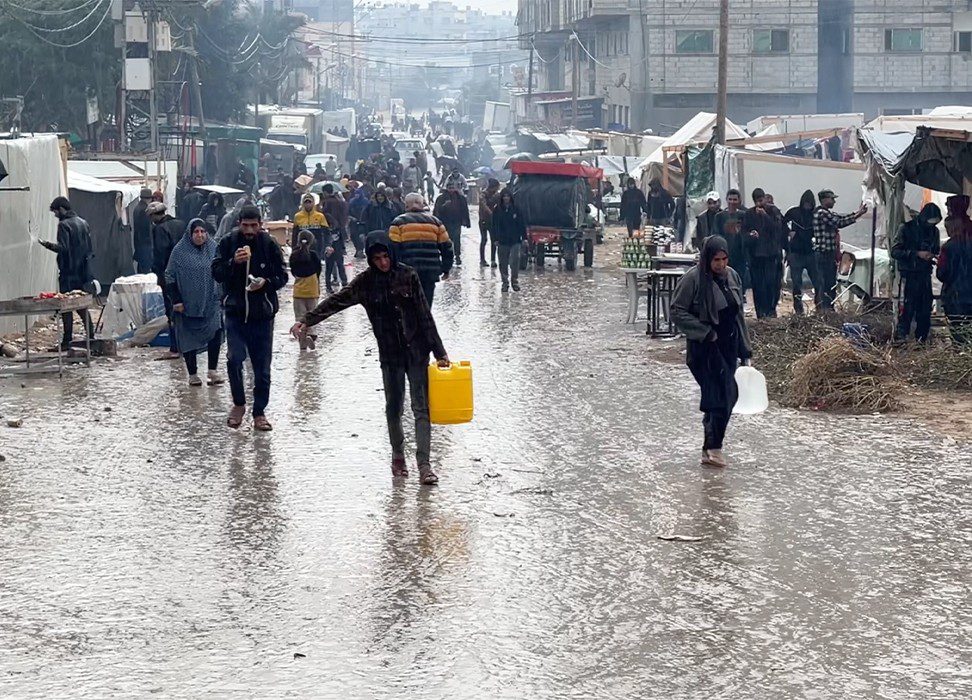
Ajith Sunghay is the head of the UN Human Rights Office in the Occupied Palestinian Territory. An international lawyer with 22 years of UN experience, Sunghay is back from a weeklong field visit to Gaza, where he visited several camps for internally displaced persons and spoke to staff and human rights defenders.
What is the human rights situation in Gaza?
It is extremely grim. The numbers are staggering. Some 45,000 people have been killed, according to the Gaza Ministry of Health, and more than 100,000 wounded. Several thousand are still under the rubble, so the figures will likely go up. There are 1.9 million people displaced out of a population of 2.3 million. There is no safe place in Gaza. Bombardments by the Israeli Defense Forces (IDF) are relentless, in the north and in Khan Younis in the south. There is also a massive scarcity of food, water, medicines, tents and other basic necessities.
The existing shelters are cramped and the sanitary conditions are disastrous. In Rafah and Khan Younis, sewage flows out from every corner. This is a ticking time bomb for an epidemic to happen.
What is life like for civilians?
Life for civilians in Gaza is miserable. Thousands of people are constantly on the move from places they have been told are safe, living in constant fear. People make tents with plastic bags and wood they can find. People are living on one meal a day if they are lucky. There is one image that stuck with me: I saw over 100 kids running towards one cart that was bringing in food. You see kids everywhere, carrying water in jerrycans, sometimes as young as four, chopping wood to use it for fire. Children have not gone to school in months – their schools and universities have been ruined, destroying their hopes for the future. Hospitals and clinics have been attacked, so few are functioning, whether it is for trauma or a woman who wants to give birth
One of the main purposes of my visit was to reinvigorate the UN Human Rights Coordinates for the Protection Cluster, so I met UN and non-UN partners. I also met with human rights defenders and NGOs. I also talked to internally displaced persons (IDPs), visiting IDP camps in Khan Younis and Rafah. You could feel the vibrations of buildings from the bombardments. For me, it is important to give confidence to the people that human rights are pertinent, despite all the current challenges. Some in the region have expressed feeling like they have been let down by the international community, that their human rights have been denied for years. We need to be able to reinforce the confidence of Palestinians, and more broadly people in the region in human rights.