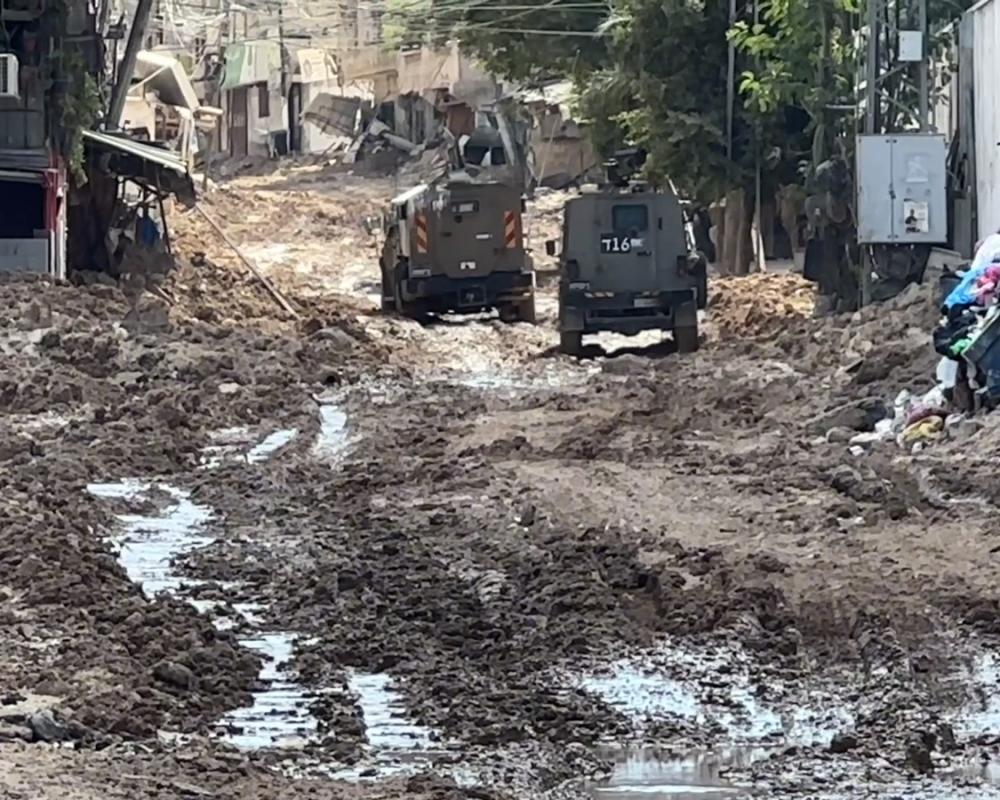
The residents of Tulkarm Refugee Camp live under the weight of a harsh reality imposed by the occupation’s oppressive and displacement policies, which target not only the land but every aspect of life, from the air Palestinians breathe to the water they drink. Through its systematic policies, the occupation aims to drain the spirit before drying up the land, using water as a weapon in its ongoing war.
A report prepared by Al-Ruwad Cultural and Arts Association, as part of the “Investing in Human Rights” project funded by the French organization ASTM and implemented by the Palestinian News Network (PNN), highlighted that targeting water networks is not merely a hostile act but a displacement tactic aimed at draining the sources of hope in people’s hearts. When water runs dry, life wilts, and the struggle for daily survival begins. In the camp, every moment turns into a battle to secure a drop of water and search for a well not yet seized by the enemy. Men, women, and children endure hardships to get a drop of water to quench their thirst and help them remain resilient.
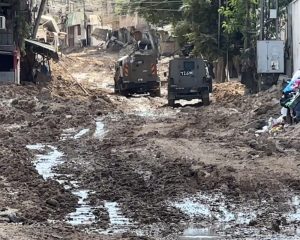
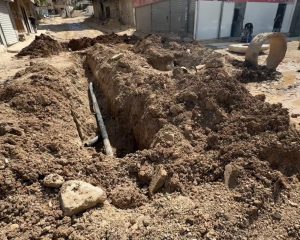
Khaled Abu Issa, an activist at the Return Center in Tulkarm Refugee Camp, said that the scale of destruction in the camp is massive and indescribable, with the destruction of infrastructure, including sewage, water, and electricity networks, along with the demolition of homes.
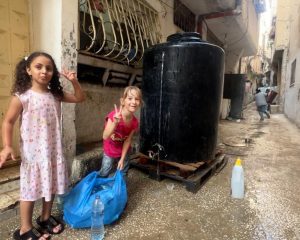
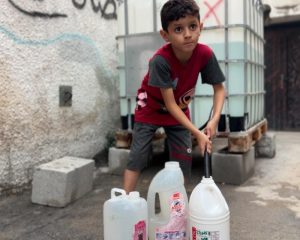
He added that the Return Center has provided water tanks to most of the camp’s neighborhoods and filled these tanks with water through trucks, with the help of camp institutions and generous individuals. He pointed out the hardship people face in filling these water tanks, walking long distances due to the inability of water trucks to access the camp’s heavily damaged streets.
Abu Issa emphasized the vital importance of water in life. The center tries as much as possible to ease the burden on residents so they can meet their basic needs. He expressed his joy when they succeed in providing water to the camp residents, which is a significant achievement under such circumstances, highlighting the essential role of water itself.
Abu Issa clarified that what the occupation is doing in the camp is a policy of displacement and destruction aimed at exhausting the people to the point where they are forced to leave the camp. This is part of the broader policy to eliminate the refugee camps and the right of return, which is the core of the Palestinian cause. He made it clear that this will not happen, as the camp residents remain steadfast despite the wounds and suffering.
However, these policies do not only aim to damage facilities and infrastructure; they are an attempt to instill despair and push people to abandon their land and homes. The camp residents understand that water is the lifeblood of existence, and whoever controls the water controls the future. This is why they are being fought over it. Every struggle for a drop of water is a fight for freedom, for survival, and for a right that is not negotiable or up for compromise.
Intisar Nafi, a resident of Tulkarm Camp, said they have been affected by the water cut-off, as they have gone more than 35 days without water since the beginning of the invasion, due to the complete destruction of water networks and roads. This prevents water trucks from reaching them, all of which she attributes to occupation policies designed to break their spirit and force them to leave the camp. Despite this, she emphasized their resilience and determination to stay in their homes no matter what. She also noted the financial burden they face as they now have to buy water cartons to meet their needs.
Another camp resident mentioned that when the occupation forces enter the camp, they cut off the water and destroy the networks. This is a deliberate policy. She explained that there were two water networks in the camp that were undamaged in previous incursions, but in the last invasion, the occupation intentionally destroyed them.
She added that the occupation doesn’t stop at destroying water networks; it also destroys the water tanks people rely on while waiting for the municipality to repair the networks.
She explained that Tulkarm Refugee Camp has become a disaster zone, where mobility is nearly impossible. It has turned into a catastrophic place to live, with no medical services available due to the occupation’s targeting of healthcare facilities and a shortage of medical supplies. Even when people manage to reach these devastated clinics, they suffer due to the poor condition of the roads, making it difficult for everyone to access them. She pointed out that the occupation has placed dirt barriers between neighborhoods and streets to further hinder movement.
Despite this, the question remains: How long will this daily struggle continue? How long will the world remain silent in the face of the occupation’s displacement policies that target the essentials of life? Under such circumstances, the camp residents prove that resilience is not just a word but a daily act and a reality they live every day in the face of policies of oppression and injustice.